The Challenge
In 10th grade, I entered the Shanghai Maker Star Contest. One event was the structure challenge. The goal was straightforward: use the least amount of balsa wood to build a tall tower that could hold the maximum compressive load.
You cannot simply build a solid, heavy block. The judges weighed every structure, and your efficiency score was the load it carried divided by its own mass. Every extra gram of balsa reduced your score unless it contributed directly to load-bearing strength.
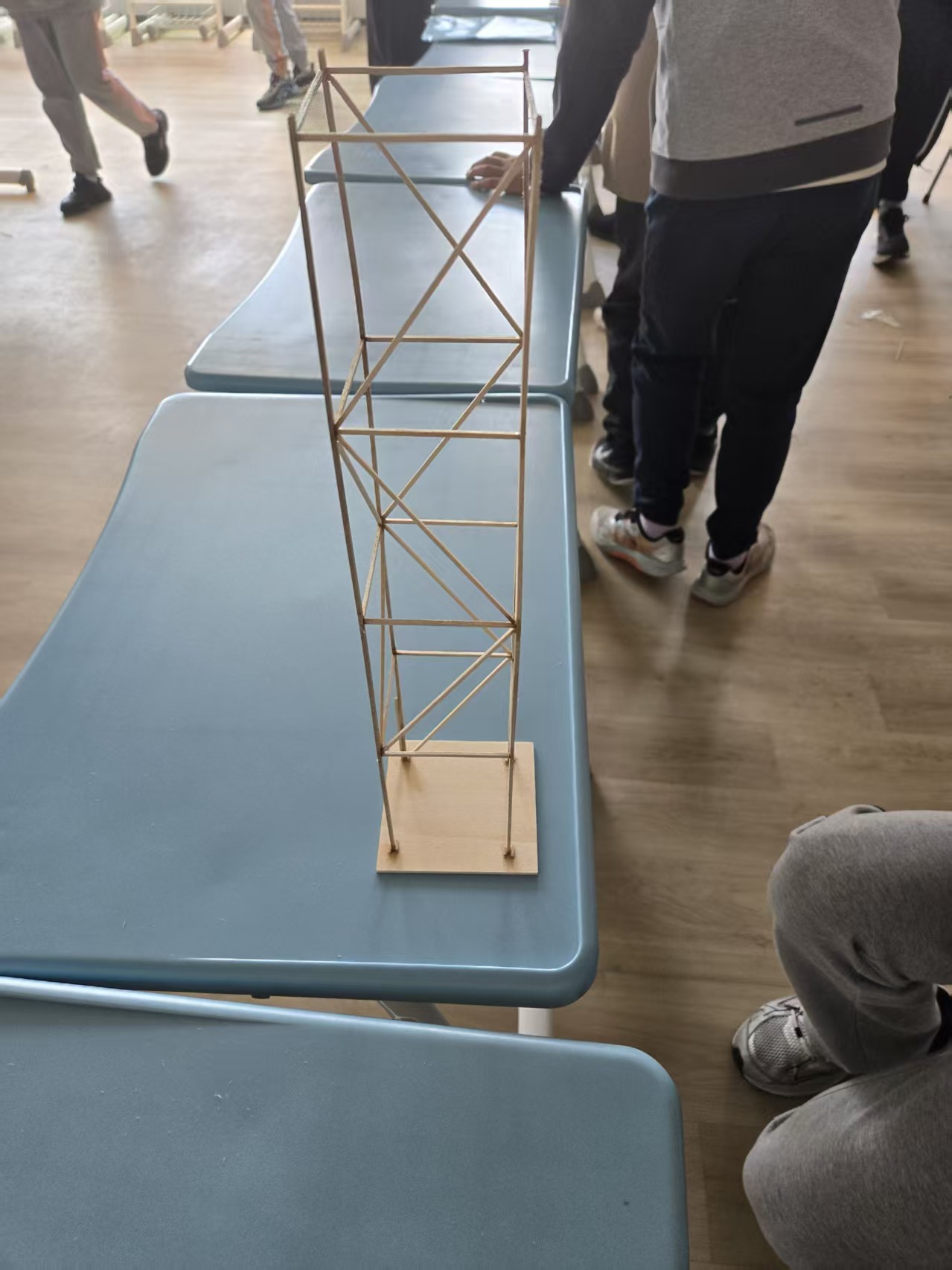 Figure 1: Finished balsa wood truss tower standing on the test desk with vertical corner columns and diagonal bracing.
Inspiration from Hong Kong Two IFC
Before cutting any wood, I needed a structural scheme. Most teams were building basic square towers with straight horizontal rungs. But tall rectangular frames easily twist or buckle under heavy vertical loads.
I remembered visiting Hong Kong earlier. Standing by Victoria Harbour, I looked up at Two IFC (International Finance Centre). It is over 400 meters tall, standing directly in the path of typhoons. It does not stand through solid thick walls. Instead, it relies on giant perimeter mega-columns at the corners and outrigger belt trusses with diagonal bracing. The load flows down through rigid triangular paths straight to the foundation.
I thought: why not apply that same structural logic to our balsa wood tower?
Weighing Every Gram
Back at home, I set up a small digital scale on my desk. Under the contest rules, keeping the frame lightweight was just as important as holding the weight.
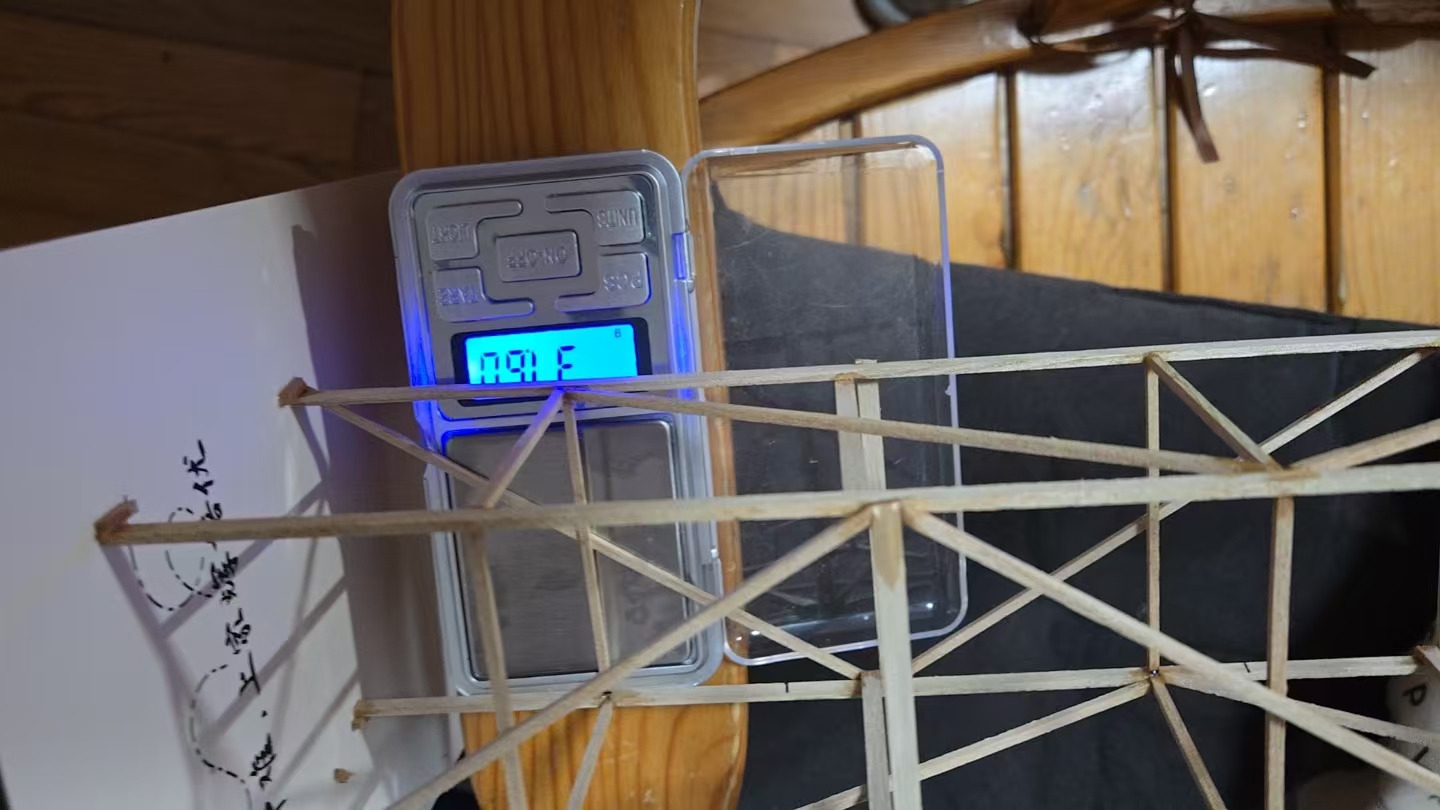 Figure 2: Mass verification on digital pocket scale reading 31.60 g with drafting notes.
Measurement Details & Notes (Figure 2):
- Digital scale readout: 31.60 g (blue backlit LCD display)
- Drafting paper note (上部…占优): Upper section truss configuration optimization notes
- Material: Lightweight balsa wood strips (cross-sections 2x2 mm and 3x3 mm)
The scale registered 31.60 grams for our main tower frame. That left enough safety margin for joint reinforcement and the top loading plate while keeping the overall mass well below the contest limit.
Drafting and Prototyping
On my desk, I laid out a spiral sketchbook and drew a full-scale triangle grid. Triangles do not deform easily because their geometry is locked by the lengths of the three sides.
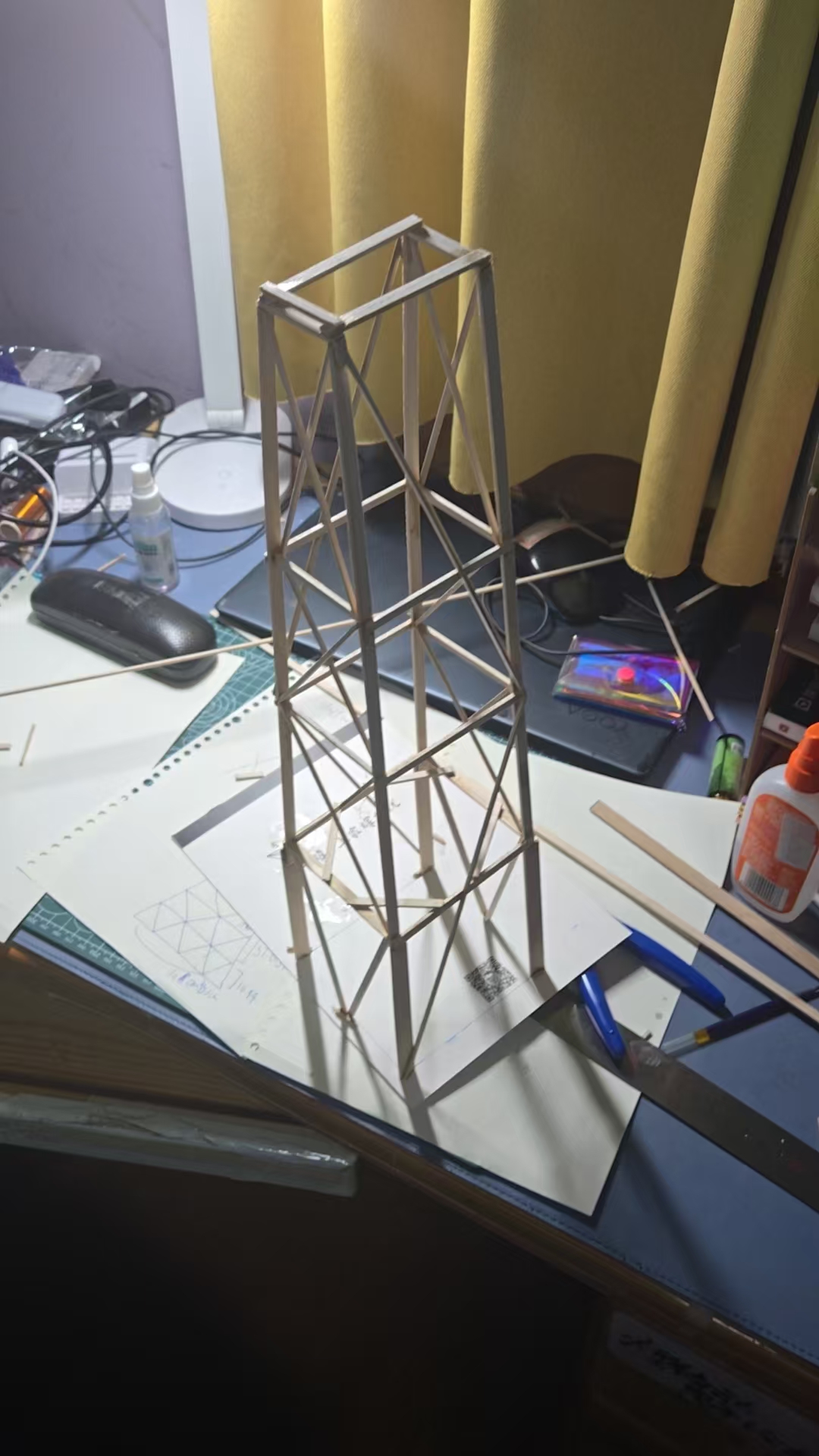 Figure 3: Assembly desk setup with triangular grid sketch, steel ruler, cutting pliers, wood glue, and rising tower frame.
Workbench Setup (Figure 3):
- Drafting pad: Spiral sketchbook with hand-drawn triangular grid and dimension marks
- Tools: Steel ruler, craft cutting pliers, cutting mat, bottle of wood glue
- Tower frame: Four vertical corner columns with diagonal X-braces and belt truss rings
Using a steel ruler and cutting pliers, I sliced balsa wood sticks to exact lengths. I joined four main vertical columns with diagonal X-braces and horizontal belt rings, following the outrigger trusses on the IFC tower. When the wood glue dried, the joints became stiff, transferring axial load directly down to the four corner legs.
Testing and Results
During preliminary testing, our tower held steady under successive weight increments without twisting or bowing. In the contest, the structure performed reliably and sustained the test load without sudden joint failure. Our team took 2nd Prize in the Shanghai division.
What I Learned
Skyscrapers in Hong Kong and balsa wood sticks on a desk follow the exact same physics. Good structural design is not about piling on more material. It is about understanding where the forces travel and giving them clean triangular paths to follow.